September 4, 2026
New
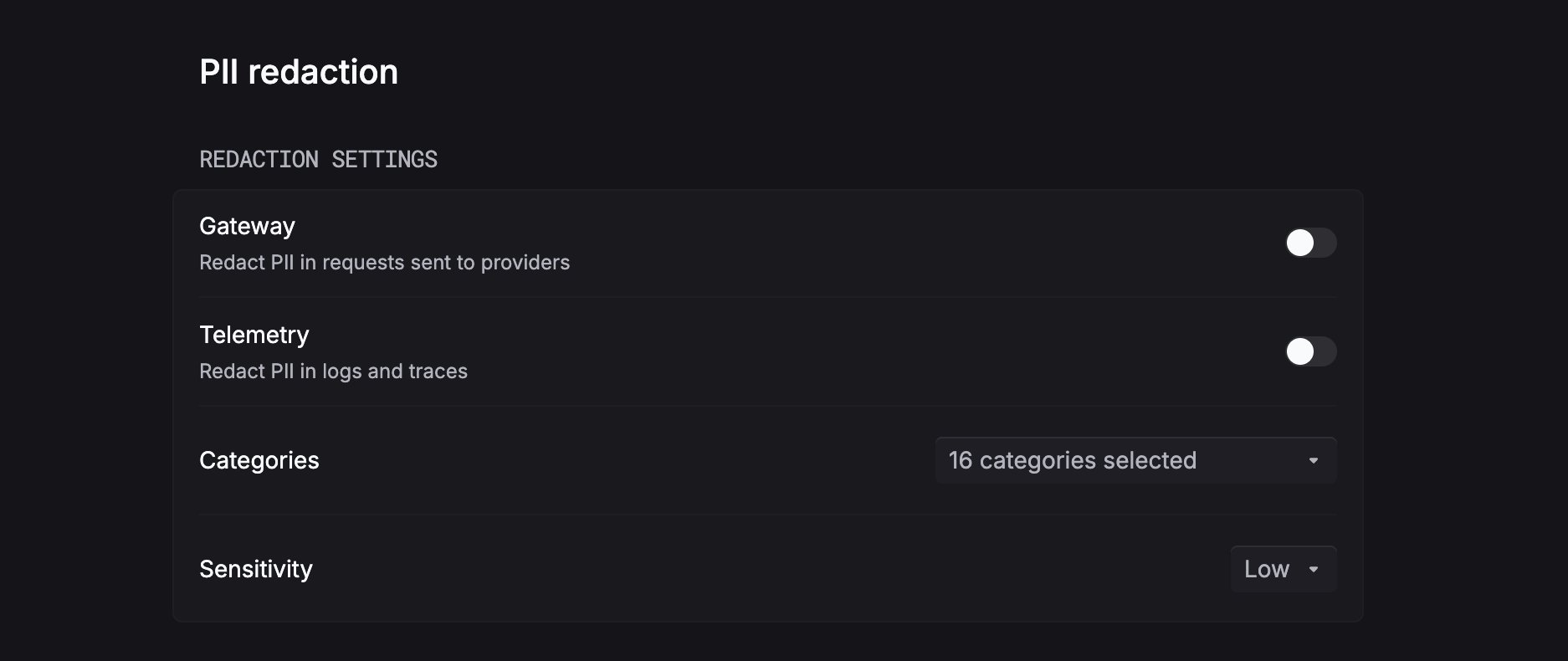
- PII redaction: added organization-level redaction settings with separate controls for Gateway requests and stored telemetry, configurable categories, sensitivity controls, and previews.
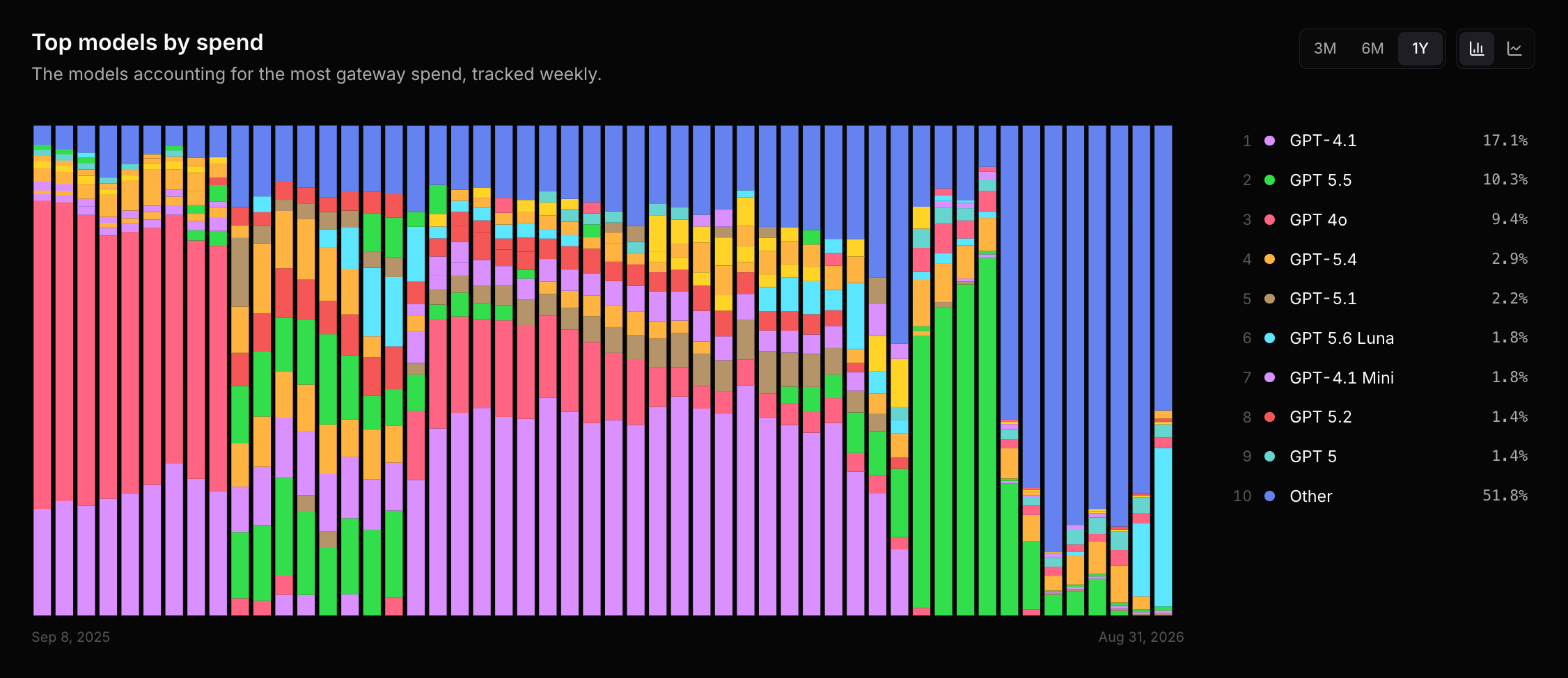
- Model leaderboard : added a Top models by spend chart to help users understand Gateway usage on the landing page.
- Observability: combined Tracing and Observability into a single experience while preserving existing links and workflows.
- Simulation : added a streamlined simulation flow where users can select a prompt and version directly, generate scenarios, run simulations, and inspect results.
Improved
- Gateway : BYOK requests can now fall back to managed credits when provider credentials encounter rate limits.
- Model leaderboard : legends now reflect the entire selected time range, model colors remain consistent, and individual models can be isolated for comparison.
- PII detection: improved redaction reliability for short telemetry fields, Unicode content, street addresses, private IPv4 addresses, and loopback IPv6 addresses.
- Tables: the first column now remains consistently frozen, preventing alignment from shifting across views.
- Behavior classification: improved processing reliability so behavior results remain current during traffic spikes.
Fixed
- Exports: partially completed exports now provide the rows successfully written, identify incomplete time ranges, and preserve failure reasons for later investigation. JSONL exports are also written as JSONL rather than JSON, which could cause downstream systems to count records twice.
- PII settings: fixed saved settings losing an explicitly selected organization or the default category configuration.
- Slack integration: fixed large channel lists causing setup requests to time out.
- Saved filters: invalid filter requests now return actionable validation errors instead of server errors.
- Security : strengthened organization access controls and prevented duplicate cash-credit events from changing balances more than once.